From raw data to 3D site models
EVS statistically interpolates HRSC data to generate 2D and 3D interactive models — contamination volumes, lithologic cross-sections, and plan-view maps. Models can incorporate existing site data for a complete subsurface picture.
How it works
From field data to interactive models
All models are built using C Tech Development Corporation's Earth Volumetric Studio (EVS) — the industry standard for environmental data visualization. EVS interpolates between borehole logs to create continuous 3D representations of the subsurface. Models can be custom-tailored by incorporating historic site data — monitoring well results, soil borings, existing geologic interpretations — alongside new HRSC data for a unified subsurface picture.
Collect
HRSC logging tools capture continuous sensor data 20 times per foot across the site.
Integrate
HRSC data is combined with any existing site data — monitoring wells, soil borings, lab results — into a single dataset.
Model
EVS interpolates between all data points, generating 3D volumes and surface models of contamination and geology.
Deliver
Interactive models, cross-sections, and plan-view maps — ready for reports, remedial design, and regulatory submittals.
Supporting remedial design
3D models provide the spatial framework for remediation planning — identifying where contamination sits relative to permeable and confining units. Use models to optimize injection well placement, target amendment delivery to the zones that matter, evaluate remediation feasibility, and support remedial design presentations to regulators and stakeholders.
Any site, any contaminant
3D modeling applies to any site where spatial understanding of contamination matters — petroleum releases, chlorinated solvent plumes, PFAS investigations, gas stations, military installations, industrial facilities, and manufactured gas plants. If you have the data, we can model it.
Deliverables
Complete visualization packages for subsurface analysis and regulatory submittals.
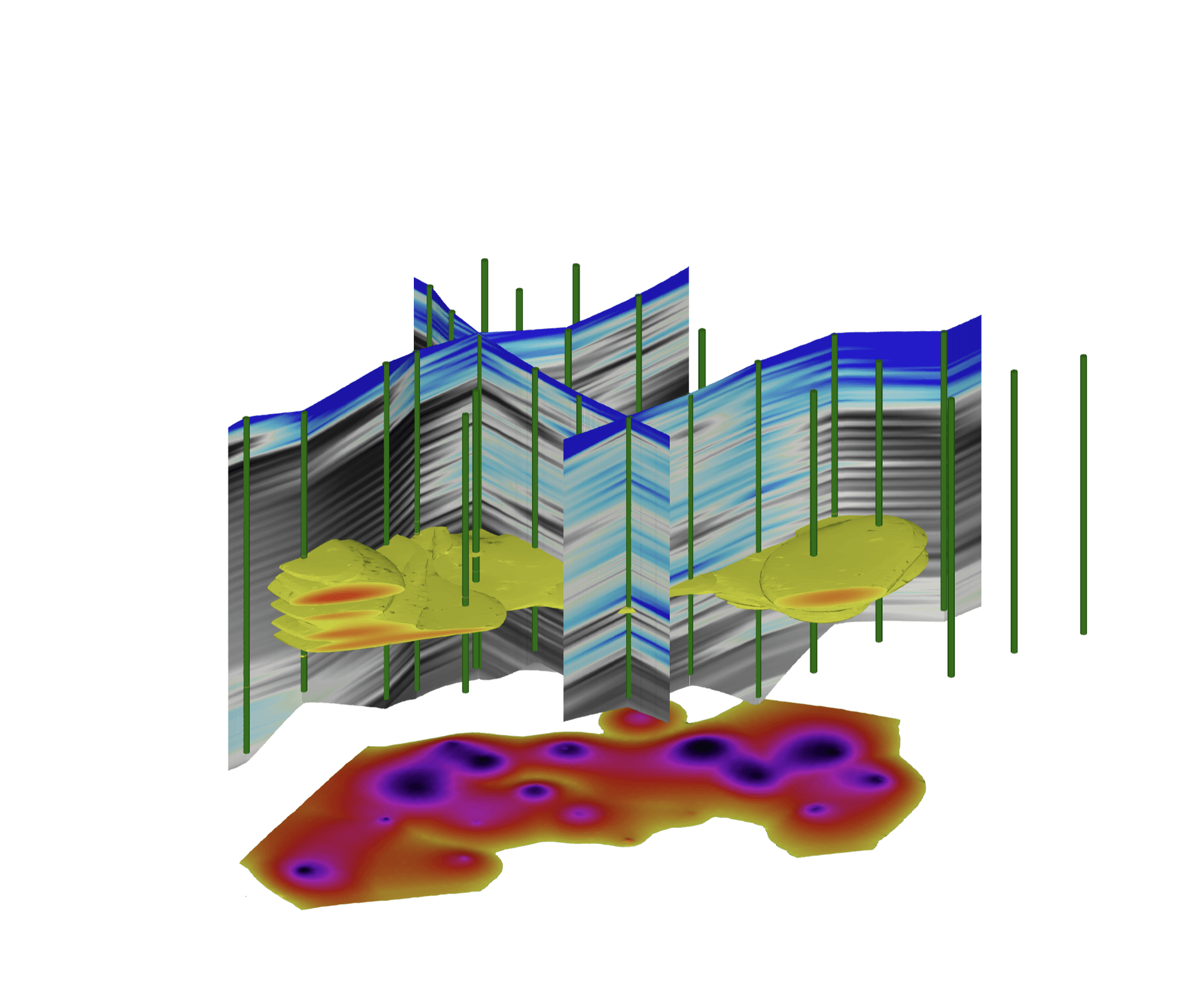
3D Contamination Models
Interactive volumetric models showing the spatial distribution of contamination. Rotate, slice, and explore the plume in three dimensions. Built from fluorescence (OIHPT) or MIP detector (MIHPT) data.
Cross-Sections
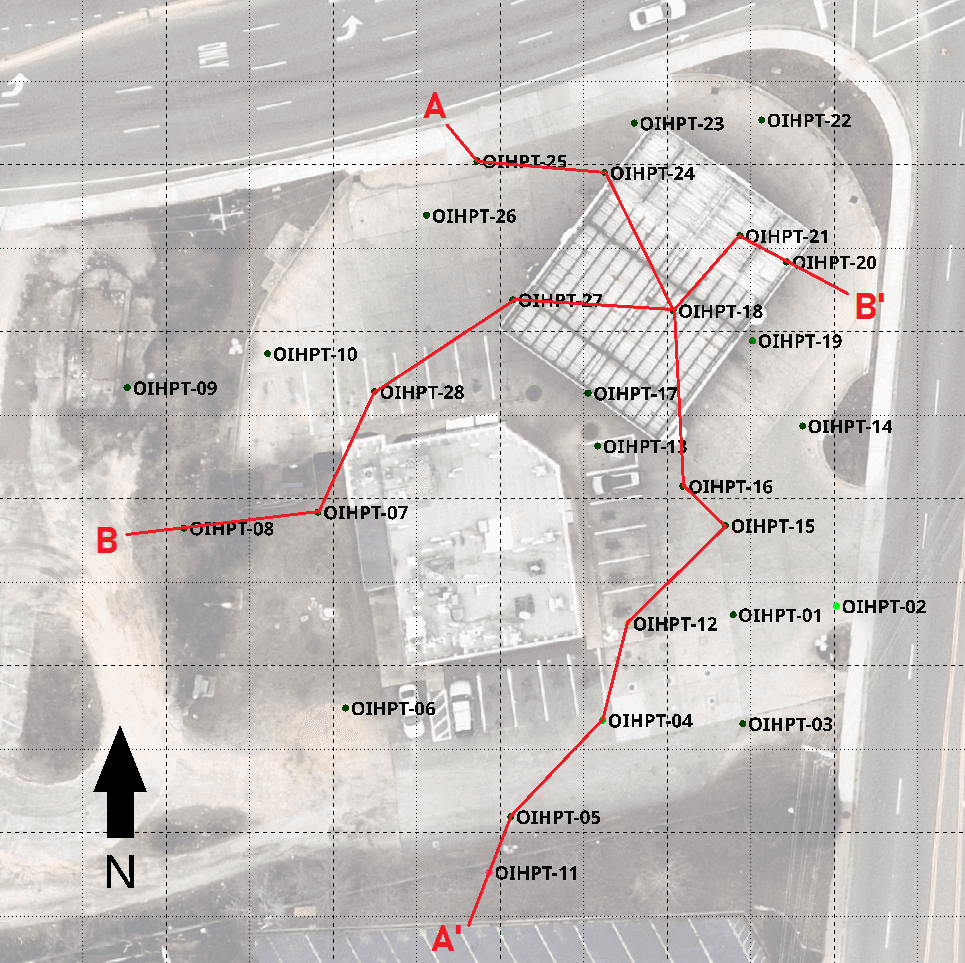
Vertical slices through the subsurface showing lithology, contamination, and hydraulic data along any transect. Correlate borehole logs across the site to understand lateral continuity of formations and plumes.
Plan-View Maps
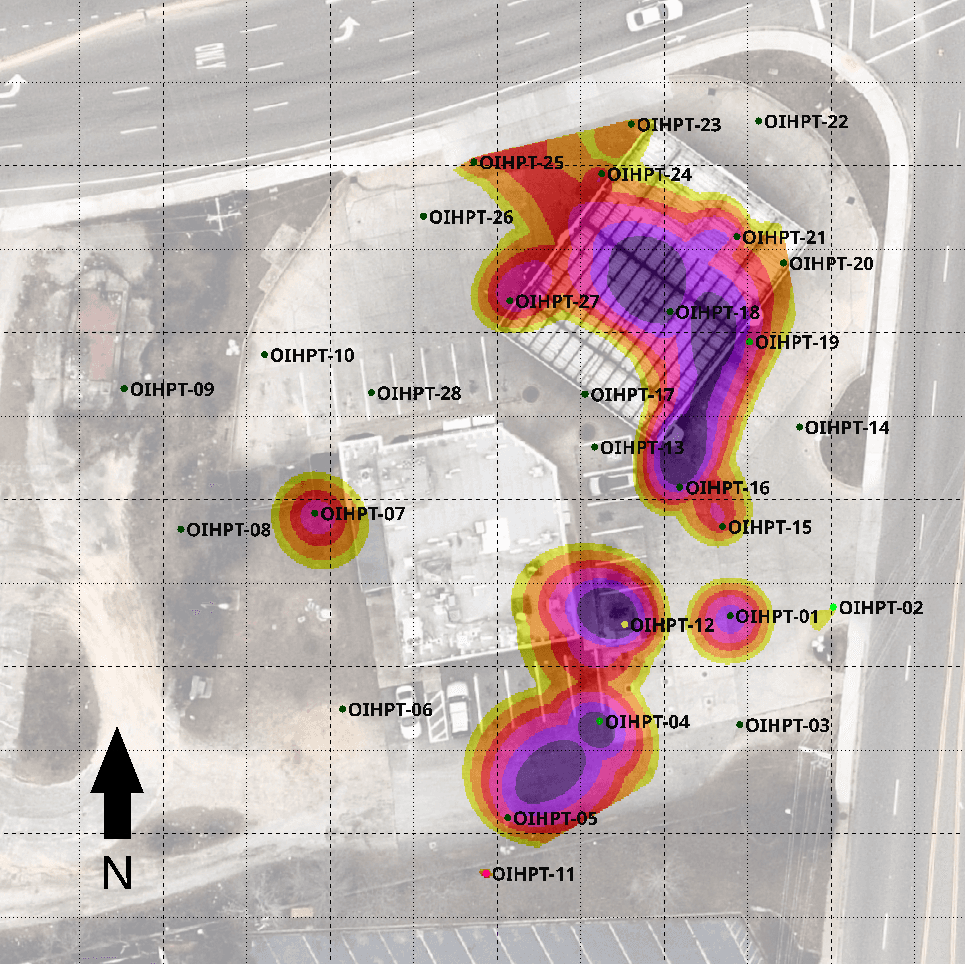
Depth-slice maps showing contamination footprint at specific depth intervals. Identify the horizontal extent of the plume at any elevation — essential for remediation targeting and regulatory reporting.
Need 3D subsurface visualization?
3D modeling services are available as part of any HRSC investigation or as a standalone deliverable from existing data. Provide the spatial context your team needs for site decisions and regulatory submittals.