Groundwater Profiler
Depth-discrete groundwater sampling with uphole HPT pressure profiling. Collect lab-quality water samples at specific depth intervals while continuously characterizing subsurface permeability.
When to use the Groundwater Profiler
How it works
Targeted sampling guided by real-time permeability data
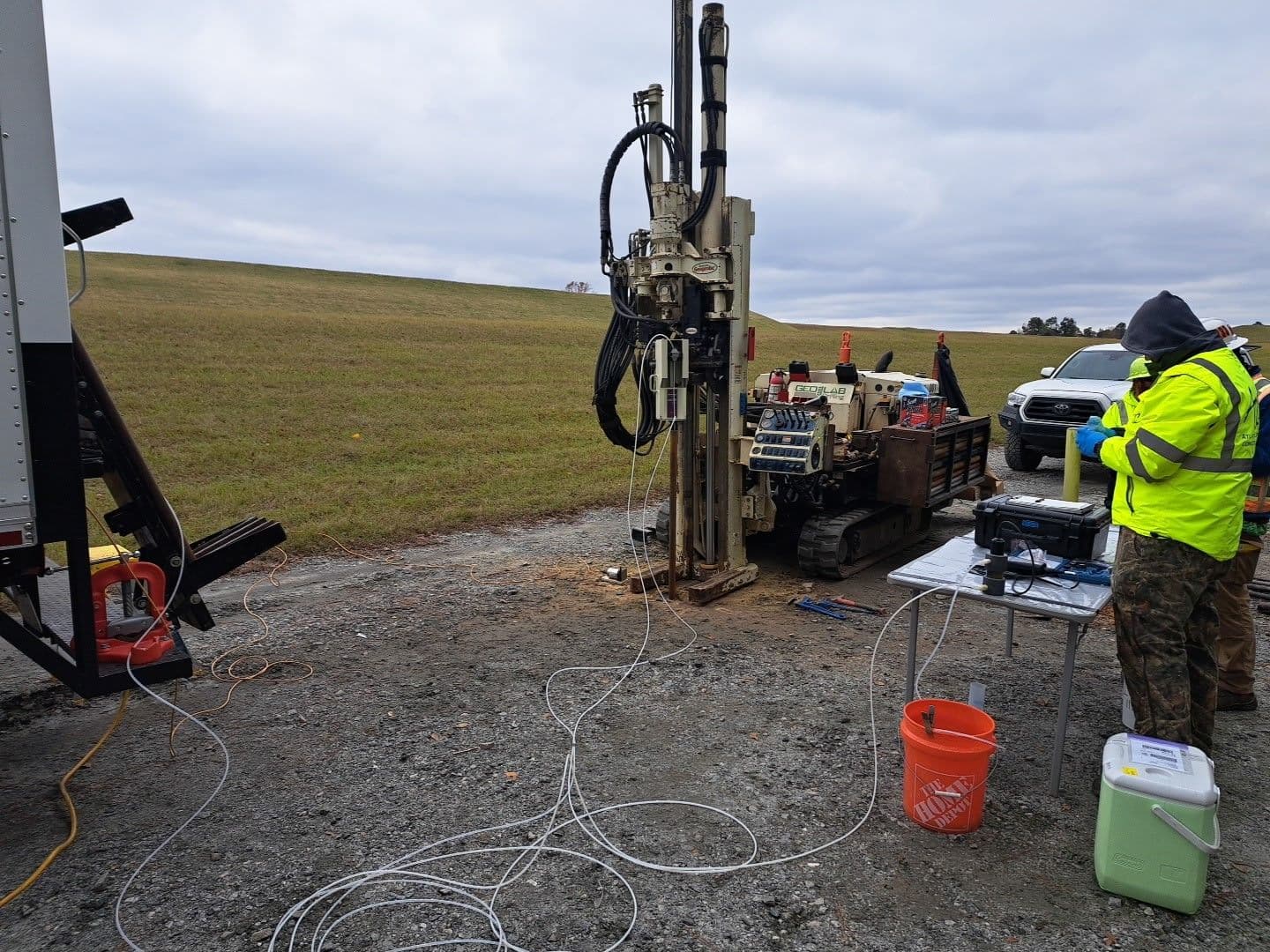
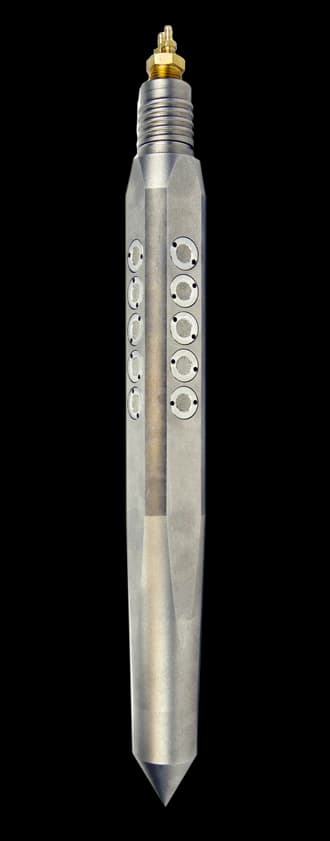
As the 1.75-inch probe advances, the uphole HPT system continuously measures injection pressure — revealing permeable zones where groundwater flows and tight formations that confine it. When the operator identifies a target zone, they stop advancing and collect a discrete groundwater sample from that specific depth. Samples are sent to a certified laboratory for quantitative analysis of any dissolved-phase analyte.
What you get
Discrete Groundwater Samples
Depth-discrete water samples collected at specific intervals for laboratory analysis. Can be analyzed for any dissolved-phase analyte — VOCs, SVOCs, metals, 1,4-dioxane, PFAS, and more.
HPT Pressureuphole, PSI
Continuous relative permeability profile measured at the surface. Low pressure indicates permeable zones (sands, gravels); high pressure indicates tight formations (clays, silts). Used to guide sampling decisions in real time.
Best paired with the HPT probe
The GWP can be used alone — uphole HPT pressures identify permeable intervals for targeted sampling. But it is best paired with the HPT probe for full permeability profiling (HPT pressure + EC lithology), or with OIHPT/MIHPT for contaminant screening before sampling. Run screening logs first to identify the zones that matter, then use the GWP to collect targeted samples — minimizing laboratory costs while maximizing data quality.
Need lab-confirmed concentrations?
The Groundwater Profiler bridges the gap between screening data and regulatory-grade laboratory analysis. Contact us to add discrete sampling to your investigation program.